Courses
Fall 2026
Becoming a Mindbender: Exploring How Light Can Control Behavior
What makes an animal decide to eat, move, or court a mate? The answer begins in the brain—but how do scientists discover which brain cells control each action?
In this hands-on course, you’ll become a neuroscientist and investigate these questions using fruit flies. Over three Saturday sessions, you’ll use red light to activate brain cells and observe what happens. Can light trigger feeding, begin courtship, or even make a fly produce a courtship song?
You’ll make predictions, conduct experiments, record behavior, and compare results with your classmates. You’ll analyze your videos, look for patterns, and learn how scientists turn observations into discoveries. Fruit flies may be tiny, but they can answer neuroscience’s biggest questions. Come experience scientific discovery—and see how light can reveal the brain’s hidden commands.
Supported by: NSF
Taught by: Sanghun Jee, Ph.D. student in Dynamical Neuroscience
Building the Human Body: Using Computational Biology to Understand How Different Cell Types Emerge from a Single Cell
How does one tiny cell become an entire organism made of hundreds of different cell types? Heart cells beat, brain cells send electrical signals, and muscle cells contract, yet nearly every cell in the body contains essentially the same DNA. So how does each cell know what to become? The answer lies in which genes are turned on or off, when they are used, and how those patterns change as an organism develops.
In this course, students will uncover how cells decide what they want to become and how scientists use computers to decode the enormous amounts of data that reveal those decisions.
Using real RNA-sequencing data from developing mouse embryos, students will investigate how different cell types emerge during development. Through hands-on activities and beginner-friendly coding, they will learn how gene expression and epigenetics help distinguish one cell type from another and how biological data can be visualized and interpreted. Students will explore genome-browser tracks, make plots, and discover why computational tools are essential when experiments measure thousands of genes at once.
The course will then connect embryonic development to stem cells, cellular reprogramming, and regenerative medicine. Students will explore how scientists can recreate aspects of development in the laboratory and use engineered cell systems to better understand biology and disease.
Students will also have the opportunity to tour bioengineering laboratories at UCSB to see what it takes to answer complex biological questions, from growing and imaging cells to analyzing data with computational tools. No previous coding or biology experience is required!
Supported by: NSF
Taught by: Elisabeth Rothman, Ph.D. student in BioEngineering and Dr. Varsha P. Desai
From Your Coffee Mug to the Universe: Exploring the Physics of Fluids
How can we understand the surface of the Sun using a pot of boiling water? What do explosions of massive stars and pouring milk into a cup of coffee have in common? How does the physics behind stirring a hot drink control the evolution of galaxies? The answers all lie in the physics of fluids! In this course, we will explore how fluids move and interact, starting with familiar examples from everyday life and extending the same ideas to some of the most spectacular phenomena in the universe. Through a combination of informal discussions and hands-on experiments, we will investigate convection, turbulence, fluid instabilities, and more, and see how these processes shape stars, supernova explosions, and galaxies. By the end of the course, you will be able to show your friends how fluids shape our universe using simple tabletop experiments.
Supported by: NSF
Taught by: Zirui Chen and Ish Kaul, Ph.D. students in Physics
The Science of Chaos
Can a butterfly flapping its wings really set off a tornado weeks later and an ocean away? Why can we predict eclipses centuries in advance, but not next week's weather? Welcome to chaos, a weird pattern of unpredictability that shows up all over the world and universe. In this class we’ll begin by investigating the simplest systems that resist prediction and learning what separates these systems from the predictable ones science often focuses on. We will work hands-on with mechanical, electrical, and simulated chaotic systems, and explore its impact from the planetary scale down to the quantum one. Our journey will end here, exploring the role chaos may play in linking the quantum and classical worlds, and how understanding chaos may be key to successfully developing quantum technologies.
Supported by: NSF Quantum Foundry through Q-AMASE-i program # DMR-1906325
Taught by: Jack Tregidga, Ph.D. students in Physics and Ruben Saatjian, Ph.D. student in Materials
Courses
Winter 2026
Secret lives of moving rivers
Think rivers are just water flowing downhill? Think again. Rivers are dynamic sculptors that relentlessly reshape the landscape, carving new paths, abandoning old channels, and building vast floodplains grain by grain. Some rivers shift hundreds of meters in just a few years, while others barely budge—but what controls these differences, and why does it matter? In this course, we'll explore how rivers move laterally across valleys, how scientists use satellite imagery and remote sensing to track channel migration across the globe, and what these patterns reveal about predicting future river behavior. Through hands-on activities analyzing real satellite imagery of rivers like the Yukon, Bermejo, and Mississippi, we'll investigate questions critical to communities living along rivers: how fast are rivers migrating in different parts of the globe? How do dams, land use change, and a warming climate affect river migration? What systems are impacted when rivers rework their floodplains? By the end, you'll see rivers not as static blue lines on a map, but as living systems constantly rewriting the landscape—and you'll understand how scientists decode their movements to protect communities, infrastructure, and ecosystems in our changing world.
Supported by: NSF
Taught by: James (Huck) Rees and Feifei Zhao, Ph.D. students in Geography
The Physics of Music
How does a microphone work, and what is dissonance actually? Behind the scenes, music is brought to life by the physics of sound waves. Throughout this course, we will talk about the interplay between physics and music, like how instruments are made and the cool algorithms used in sound design. The course will include a mix of lectures and hands-on experiments. We’ll also look at the reverse: how music benefits our understanding of physics. Whether it’s the sonification of data or the visualizing the wave-like nature of quantum mechanics, nature harmonizes in cool and unexpected ways!
Supported by: NSF Quantum Foundry through Q-AMASE-i program # DMR-1906325
Taught by: Alex Giovannone, Kathlynn Simotas, and Michael Arena, Ph.D. students in Physics
Fall 2025
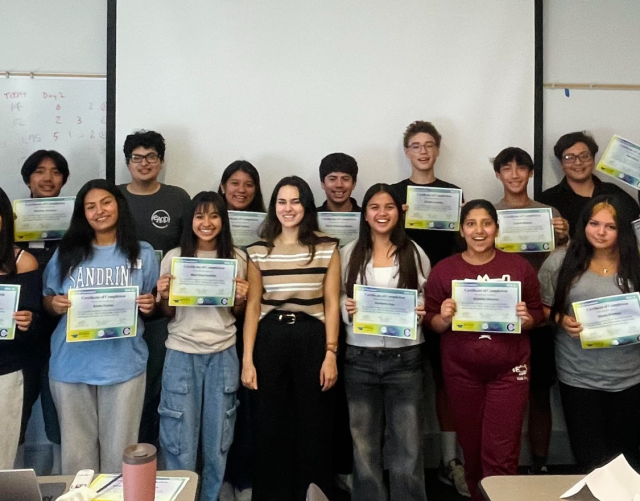
REAL AI Bootcamp - Learn, Create and Imagine the Future
Explore the world of AI through hands-on activities and fun projects! In this class, you will experience the applications of AI in our life, learn the fundamental building blocks of AI, and train your own AI models, and gain the power to explore the AI world. With hands-on activities, you will learn how models learn from data, how
computer programs see and understand the world. In coding projects, you will learn how to adapt AI models for your own needs, and explore how language models like ChatGPT process human language. Come learn, create and imagine the future with us!
Supported by: CAREER: From Dirty Data to Fair Prediction: Data Preparation Framework for End-to-End Equitable Machine Learning NSF #2341055
Taught by: Tian Qiu and Rasta Tadayon Tahmasebi, Ph.D. students in Computer Science
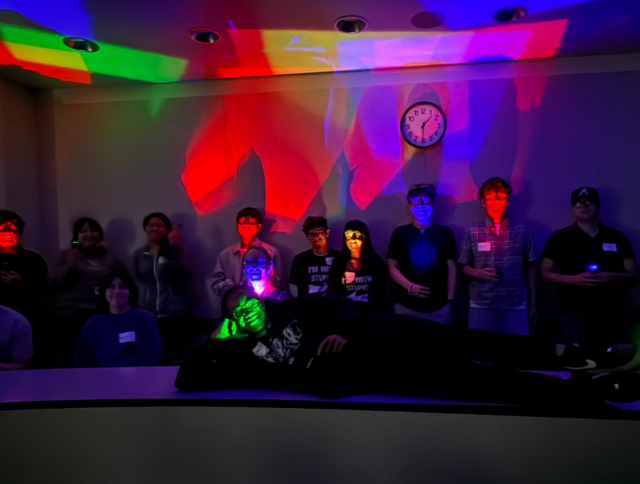
Cloudy with a Chance of Luminous Meatballs
Why do fireflies glow in the dark? Why can deep-sea anglerfish light up the ocean? The answer is bioluminescence—a process powered by quantum mechanics! In fact, every source of light—whether from a firefly, a laser pointer, or the screen you’re reading this on—comes from the quantum interactions of electrons and photons. When electrons shift between energy levels inside atoms and materials, they release tiny packets of light called photons. You can imagine each photon as a “luminous meatball” raining down from the cloud of quantum interactions.
In this course, we’ll uncover how these invisible quantum rules give rise to very visible technologies. We’ll start with light-emitting diodes (LEDs)—where electrons in semiconductors make light. We’ll then expand to superluminescent diodes (SLDs), which combine quantum randomness with engineering designs for brighter, narrower light sources. Finally, we’ll dive into the ultimate quantum light source: the laser, where photons march in perfect steps through stimulated emission.
Through lectures, simulations, and hands-on activities with Arduinos and optical demos, you’ll explore how the abstract world of quantum mechanics leads directly to the devices that light our homes, connect our internet, and probe the mysteries of the universe. By the end, you’ll see how the field of photonics—engineering light-matter interactions on the nanoscale—rests on the rules of the quantum world.
Supported by: NSF Quantum Foundry through Q-AMASE-i program # DMR-1906325
Taught by: Roark Chao and Justin Tan, Ph.D. students in Electrical & Computer Engineering
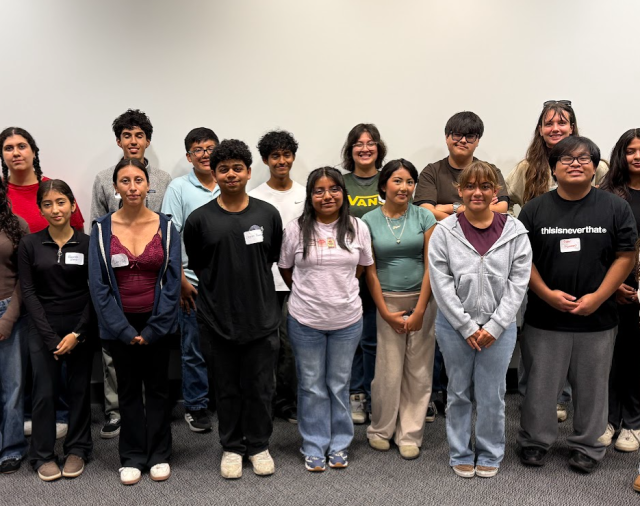
Biosensors: how we detect the world around us
In a data driven world, humanity's ability to quantify a given metric is all but essential. From healthcare to environmental health, food safety to manufacturing, biochemical sensors inform many of the processes and decisions we may take for granted. This course asks how we can do this accurately and specifically? Moreover, is it possible for us as researchers to leverage the work nature has already done to make our lives easier? Students dive deeply into a field made possible by the intersection of chemistry and biology with computer science and engineering. They will learn about and compare problems solved by existing biosensors as well identify areas where a sensing platform could make a tremendous impact.
Supported by: Professional Development Series for Graduate Student and Postdoctoral Scholars
Taught by: Shaylee Larson, Ph.D. student in Bioengineering and Lizzy Kerman, Rose Mery Bakestani, Ph.D. students in Chemistry and Biochemistry
Winter 2025
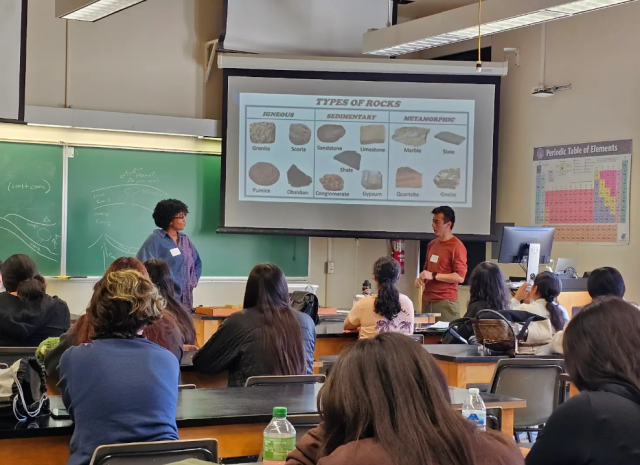
Earths Rumbles Unveiled: Investigating Quakes and the Subsurface
Discover the inner workings of earthquakes, explore their origins and mechanisms, and learn how scientists detect and analyze these tremors and how non-earthquake sources of vibrations play a role in the readings too. Unveil the forces shaping our planet's surface as you delve into plate tectonics, its driving forces, and how that shapes Earth’s landscape from the middle of the ocean to our own backyards. Unravel the mysteries of Earth's layered composition, from the tectonic plates to the core. Explore how the Earth’s interior also responds to continuously changing variables like temperature and pressure, to understand more material behavior. Come engage in stimulating discussions and practical hands-on experiments, equipping you to comprehend the forces that shape our ever-changing planet!
Supported by: New imaging of mid-ocean ridge systems at the Galápagos triple junction NSF #2143865
Taught by: Keneni Godana and Cristhian Salas, Ph.D. students in Earth Science
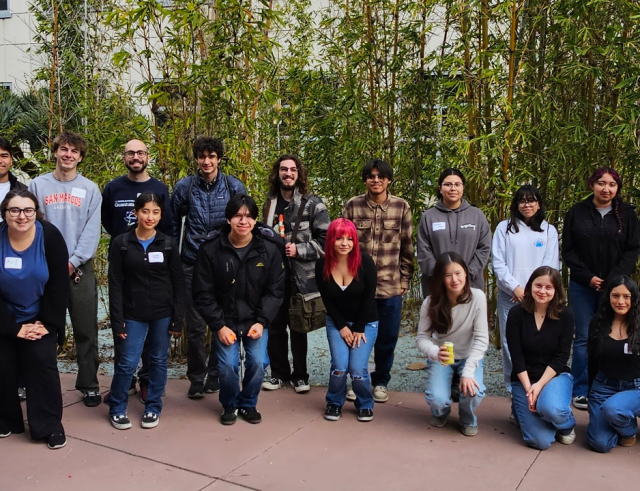
The Physics of Music
How does a microphone work, and what is dissonance actually? Behind the scenes, music is brought to life by the physics of sound waves. Throughout this course, we will talk about the interplay between physics and music, like how instruments are made and the cool algorithms used in sound design. The course will include a mix of lectures and hands-on experiments. We’ll also look at the reverse: how music benefits our understanding of physics. Whether it’s the sonification of data or the visualizing the wave-like nature of quantum mechanics, nature harmonizes in cool and unexpected ways!
Supported by: NSF Quantum Foundry through Q-AMASE-i program # DMR-1906325
Taught by: Alex Giovannone, Kathlynn Simotas, and Michael Arena, Ph.D. students in Physics
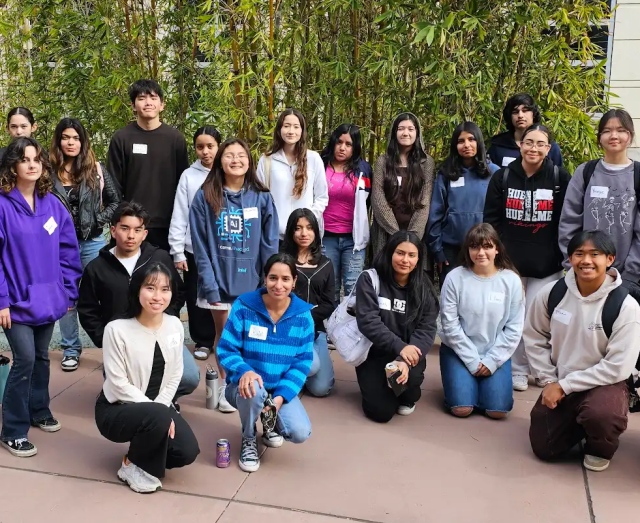
The Quantum Around Us
You've probably heard all the buzzwords about quantum physics on the internet by now. The cat that is dead and isn't dead, spooky actions at a distance, quantum computers that solve problems quickly by trying all solutions simultaneously. While many of us have a vague idea about these phenomena, we need to delve a little deeper to truly appreciate the weirdness of the quantum world. In this short course, first, we will build up concepts such as superposition, polarization, diffraction, and measurements through hands-on physical experiments, interactive demonstrations, and web-based simulation tools. Next, we will use these concepts and see how they apply to real quantum experiments, and discuss the real mysteries and absurdities of the quantum world. (Keywords: Photonics, Materials, Physics, Electrical Engineering).
Supported by: NSF Quantum Foundry through Q-AMASE-i program # DMR-1906325
Taught by: Sahil Patel, Amalu Shimamura, Ph.D. students in Electrical & Computer Engineering and Sean Doan, Ph.D. student in Physics
Winter 2024
From Biocompatible Materials to Boba Drinks: How Hydrogels Give Us Leverage
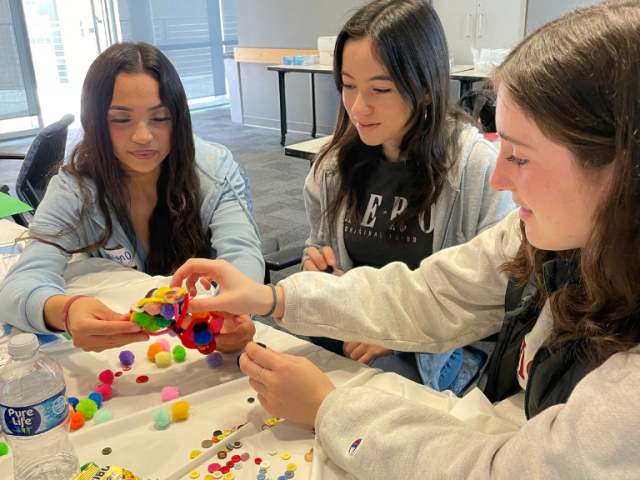
The advancement of tissue engineering, design of medical implants, and development of drug delivery systems require biocompatible materials that behave similarly to the human body: soft, flexible and containing high water content. One class of materials that fits these criteria are hydrogels, which are made out of hydrophilic polymers that readily swell with water. In this course students will learn about both synthetic and naturally derived hydrogels, their prevalence in our daily lives (from popping boba to contact lenses!) and their potential in next-generation biomaterials and therapeutics. The course will involve hands-on activities including making hydrogels from biopolymers, studying hydrogel properties such as swelling, stiffness and decomposition, and lab tours within UCSB’s BioPACIFIC Materials Innovation Platform facilities.
Supported by: NSF Materials Innovation Platform through BioPacific # DMR-1933487
Taught by: Gianna Gathman, Ph.D. student in Bioengineering, Shawn Mengel and Cassidy Tobin, Ph.D. students in Chemistry Engineering
Quantum Mechanics Demystified: Exploring the role of quantum science in modern technology
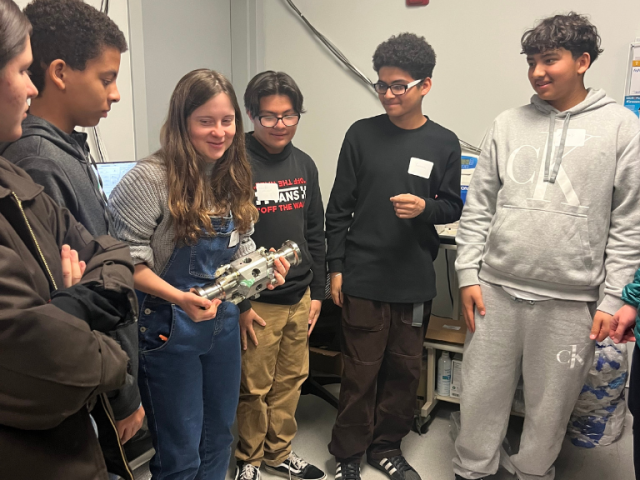
Have you ever wondered about the true meaning behind the word “quantum” that’s so casually used in superhero movies and trendy product names? What is it really like to do research in the field of quantum science? In this course, we’ll unravel the mysteries behind key concepts in quantum mechanics and hear the fascinating stories of how these ideas were discovered. Next, we'll bridge the gap between theory and reality by exploring the applications of quantum principles in cutting-edge technology. Get ready for an interactive journey where we’ll develop an understanding of the experiments that sparked the quantum revolution, and actually see the equipment and labs where quantum research comes to life. Whether you're passionate about materials science, engineering, chemistry, mathematics, or programming – there's a place for you in the captivating realm of quantum science!
Supported by: NSF Quantum Foundry through Q-AMASE-i program # DMR-1906325
Taught by: Alex Hallett, Ph.D. student in Materials Science
HackGPT: Using Artificial Intelligence to Become a Master Hacker
Can Artificial Intelligence (AI) be hacked? Is ChatGPT reading my mind? Are all hackers evil, or do good hackers exist? If so, how do I become one?
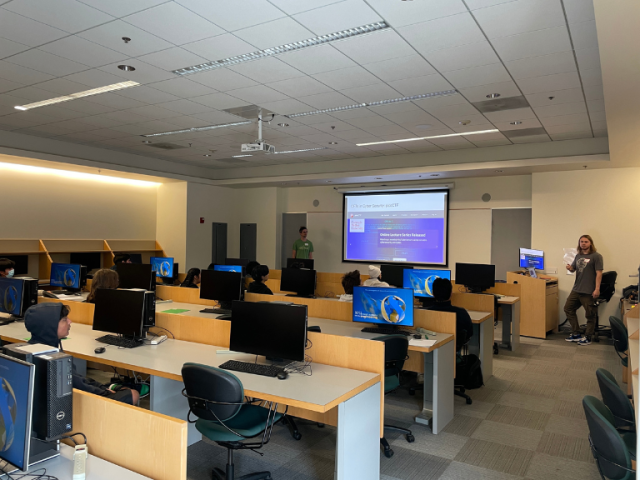
This course offers an engaging introduction to cybersecurity principles and AI basics. We will highlight the intersection of AI and cybersecurity, emphasizing how AI transforms digital security. Students will gain hands-on experience with innovative tools such as ChatGPT, using it to tackle cybersecurity challenges (you read that right, we will hack things. Ethically.). Everyone interested in technology is welcome! This course requires no prior experience and promises a journey into the future of AI and cybersecurity.
Supported by: SecLab UCSB
Taught by: Dr. Ilya Grishchenko, Postdoctoral Researcher and Stijn Pletinckx, Ph.D. student in Computer Science
Fall 2023
Earths Rumbles Unveiled: Investigating Quakes and the Subsurface
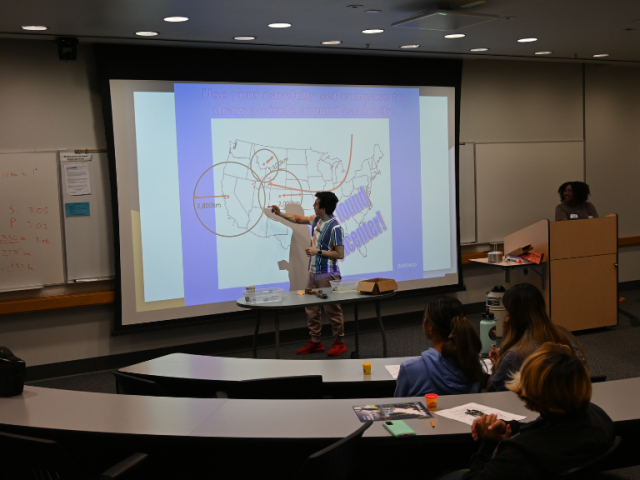
Discover the inner workings of earthquakes, explore their origins and mechanisms, and learn how scientists detect and analyze these tremors and how non-earthquake sources of vibrations play a role in the readings too. Unveil the forces shaping our planet's surface as you delve into plate tectonics, its driving forces, and how that shapes Earth’s landscape from the middle of the ocean to our own backyards. Unravel the mysteries of Earth's layered composition, from the tectonic plates to the core. Explore how the Earth’s interior also responds to continuously changing variables like temperature and pressure, to understand more material behavior. Come engage in stimulating discussions and practical hands-on experiments, equipping you to comprehend the forces that shape our ever-changing planet!
Supported by: New imaging of mid-ocean ridge systems at the Galápagos triple junction NSF #2143865
Taught by: Keneni Godana and Cristhian Salas, Ph.D. students in Earth Science
The Art of Physics
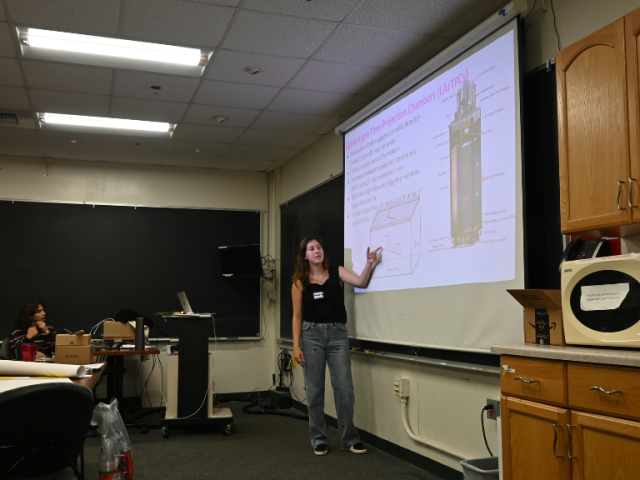
What does an experimental physicist actually do? Sure, sometimes we stand and do problems on the chalkboard, but so much of experimental physics research is driven by creative thinking, problem solving, and making things with our hands. In this course we'll explore some of the most common fundamental physics research tools like lasers, magnets, detectors, and how these technologies are harnessed in building things to answer deep questions about the universe. We'll get a taste of how physics experimentalists tackle physics problems, and discover how exercising our creative skills helps us do interesting science. This course will be about physics, but it will also be about art, creative expression, and expanding our physics explorations beyond just calculations and math. We'll spend half of each day learning about modern and relevant topics in experimental quantum and particle physics, and the other half learning how to solder by making our own stained glass art pieces.
Supported by: NSF Quantum Foundry through Q-AMASE-i program # DMR-1906325
Taught by: Madeleine Bow Jun Leibovitch, Ph.D. student in Physics
The Soft, the Squishy, and the Self-Assembling
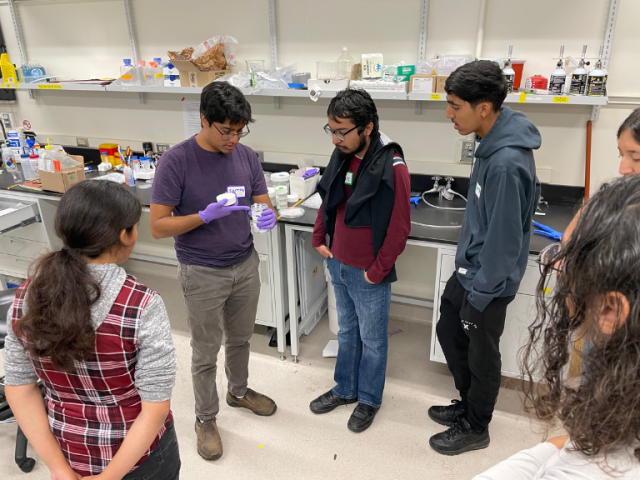
Put out your hand and look at your fingers. Are you solid? Are you liquid? To a physicist, you might be both! Much like whipped cream or toothpaste, living cells and tissues share both liquid and solid properties, depending on how you pull or prod them. Join us and learn how the blossoming field of soft matter physics unifies this diverse class of fascinating materials. In particular, this course will introduce concepts like self-assembly, phase separation, and viscoelasticity through discussions, demonstrations, and hands-on experiments. No formal background in physics or math is required for this course and all are encouraged to attend!
Taught by: Rémi Boros, Yu-Chuan Cheng, Nicholas Cuccia, Sattvic Ray, Ph.D. students in Physics, and Alana Hartsell-White, undergraduate in Physics
Past Years
Winter 2023
-
Conserving species in the context of climate change
-
Human activity has disturbed vast swaths of ecosystems around the planet, threatening the survival of species now and in the future. This course will discuss issues related to land cover change and approaches to plan where to conserve and restore key habitat to promote biodiversity as the climate changes. Students will learn to find information about species observations and habitat ranges. Students will also map species occurrences and land cover. Pairs of students will create a species distribution model to predict species occurrences now and under changing climate.
Supported by: NSF Division of Environmental Biology #2042526
Taught by: Nākoa Farrant, Ph.D. student in the Bren School of Environmental Science & Management
- Craft, Computers, Hands, and Robots: 3D-Printing Ceramic and Textile Artifacts
-
3D printing involves digitally controlling a robot’s movement to deposit material layer-by-layer until we end up with the shape we want. When people talk about 3D printing, we usually think of thin filaments of plastic stacked on top of each other – but can we use other materials with this method? The answer is yes! This course will cover the intersection of digital fabrication and two traditional craft practices, i.e. ceramics and punch needle embroidery. At the end of the course, everyone will have made one rigid ceramic and one fluffy textile object using a combination of digital and manual craft techniques. We will learn about writing code that controls the machine’s movements, working with our hands to process clay, digitally designing 2D and 3D shapes for 3D printed fabric and pottery, and embroidering 3D printed fabric with yarn and punch needles.
Supported by: NSF Division of Information and Intelligent Systems #2026286
Taught by: Ashley Del Valle and Mert Toka, Ph.D. students in Media Arts and Technology
- From Biomedical Devices to Gummy Candy: How Hydrogels Give Us Leverage
-
The advancement of tissue engineering, design of medical implants, and development of drug delivery systems require biocompatible materials that behave similarly to the human body: soft, flexible and containing high water content. One class of materials that fits these criteria are hydrogels, which are made out of hydrophilic polymers that readily swell with water. In this course students will learn about both synthetic and naturally derived hydrogels, their prevalence in our daily lives (from gummy candy to contact lenses!) and their potential in next-generation biomaterials and therapeutics. The course will involve hands-on activities including making hydrogels from biopolymers, studying hydrogel properties such as swelling, stiffness and decomposition, and lab tours within UCSB’s BioPACIFIC Materials Innovation Platform facilities.
Supported by: NSF Materials Innovation Platform through BioPacific # DMR-1933487
Taught by: Shawn Mengel and Cassidy Tobin, Ph.D. students in Chemistry Engineering
- Optics, Lasers, and Quantum Physics (Similar to Fall 2022 Course)
-
When people talk about optics, maybe you think about glasses and lenses, or maybe even about cameras and corneas! But did you know that physicists use a variety of optical techniques to explore critical scientific questions in quantum physics? In this course we will dive into the fundamentals of optics, lasers and their use in studying the quantum nature of our world. We will learn the fundamentals of how lasers work, conduct our own experiment using light from lasers to image microscopic objects, and explore beautiful and interesting properties of light as a scientific tool. This course will involve hands-on projects using laser imaging, lectures on fundamental physics topics, and lab tours in UCSB’s physics department.
Supported by: NSF Quantum Foundry through Q-AMASE-i program # DMR-1906325
Taught by: Madeleine Leibovitch, Jared Pagett, and Sam Brantly, Ph.D. students in Physics, along with Simon Mitchell, a senior CCS student in Physics
Fall 2022
- Geological Climate Change
-
Over Earth’s ~4.5 billion year history, the climate state has varied between an ice-free world (Waterworld), high-latitude glaciation (like today), and globally glaciated with ice extending to the equator (Snowball Earth). This course will provide background to understand the processes that control the planetary climate state on geological time scales, which are the input to climate models. We will then review the geological record to understand how we know the Earth has transited between different climate states and why. This will provide context for the modern human experiment of transforming the Earth from a climate with high-latitude glaciation to a Waterworld. We will end the course with a field trip to rock outcrops on the beachfront at UCSB to learn how geologist extract ancient climate records from rocks.
Supported by: Do arc-continent collisions in the tropics set the Earth's climate state? NSF #1926001
Taught by: Eliel Anttila and Bets Hobart, Ph.D. students in Earth Science
- Optics, Lasers, and Quantum Physics
-
When people talk about optics, maybe you think about glasses and lenses, or maybe even about cameras and corneas! But did you know that physicists use a variety of optical techniques to explore critical scientific questions in quantum physics? In this course we will dive into the fundamentals of optics, lasers and their use in studying the quantum nature of our world. We will learn the fundamentals of how lasers work, conduct our own experiment using light from lasers to image microscopic objects, and explore beautiful and interesting properties of light as a scientific tool. This course will involve hands-on projects using laser imaging, lectures on fundamental physics topics, and lab tours in UCSB’s physics department.
Supported by: NSF Quantum Foundry through Q-AMASE-i program # DMR-1906325
Taught by: Madeleine Leibovitch and Sam Brantly, Ph.D. students in Physics, along with Simon Mitchell, a senior CCS student in Physics
- The Quantum Around Us
-
You've probably heard all the buzzwords about quantum physics on the internet by now. The cat that is dead and isn't dead, spooky actions at a distance, quantum computers that solve problems fast by trying all solutions all at once (I promise this is not how it works!). While many of us have a vague idea about these phenomena, to truly appreciate the weirdness of the quantum world, we need to delve a little deeper. In this course, first, we will build up the concepts such as superposition, polarization, diffraction, and measurements through hands-on physical experiments, interactive demonstration, and web-based simulation. Next, using these concepts, we approach an actual quantum experiment and discuss the real mysteries and absurdities of the quantum world. (Keywords: Photonics, Materials, Physics, Electrical engineering)
Supported by: NSF Quantum Foundry through Q-AMASE-i program # DMR-1906325
Taught by: Josh Castro and Kamyar Parto, Ph.D. students in Electrical and Computer Engineering
Winter 2022
- Soft Robotics: Nature Informs the Next Generation of Robots
-
Soft robots? When most people think of a traditional robot, their mind jumps to human-like robots in movies like iRobot or Wall-E, news of robot “dogs” sold by the Boston Dynamics company, or maybe robotic arms on a factory floor used to make cars. Despite their different functions, all three of the previously mentioned robots are made of hard, stiff components like metal. Soft robots on the other hand, draw inspiration from animals, including humans, who are able to run, walk, jump, fly, and pounce—all using a simple but elegant combination of fluids (e.g., water), stiff structures (e.g., bones), and soft structures (e.g., tissues, muscle). In this class, we might create robot arms that swing and bend like elephant trunks or inch along like worms, all while exploring the question: what are the strengths of making things soft? (Keywords: Soft Robotics, Light-sensitive materials, Engineering)
Supported by: EFRI C3 SoRo: Overcoming Challenges in Control of Continuum Soft Robots through Data-driven Dynamic Decomposition and Light-modulated Materials NSF #1935327
Taught by: Luke F. Gockowski, Ph.D. student in Mechanical Engineering
- Hands-on with Geology: Using Rocks to Learn about Earth History
-
Our knowledge of the motions of Earth's continents, the development of the first lifeforms, the ice ages, and so much more all follows from the rock record. Earth's surface at any given moment has a small chance of being preserved as sedimentary rock for us to study, giving us windows into times long past and worlds that no longer exist. Our challenge as sedimentary geologists is to tell the stories of these past worlds by investigating the rock record to understand past environments, climates, and planetary states. This course will provide a glimpse into doing science as a geologist by studying the rocks on our very beachfront at UCSB. We will make measurements of rock composition with a state-of-the-art instrument, and work together to interpret our observations and test hypotheses about campus 15 million years ago.
Supported by: Did the formation of the Great Unconformity trigger oxygenation and the Cambrian explosion? NSF #1916698
Taught by: Adrian Tasistro-Hart, Ph.D. student in Earth Science
- From Biomedical Devices to Your Trendy Boba Beverage: How Hydrogels Give Us Leverage
-
The advancement of tissue engineering, design of biomedical devices, and development of novel therapeutics require biocompatible materials that behave similarly to the human body: soft, flexible and containing high water content. One class of materials that fits these criteria are hydrogels, which are made out of hydrophilic polymers that readily swell with water. In this course students will learn about both synthetic and naturally derived hydrogels, their prevalence in our daily lives (from boba to contact lenses!) and their potential in next-generation biomaterials and therapeutics. The course will involve hands-on activities including making hydrogels from biopolymers, studying hydrogel properties such as swelling, stiffness and decomposition, and lab tours within UCSB’s BioPACIFIC Materials Innovation Platform facilities.
Supported by: NSF Materials Innovation Platform through BioPacific # DMR-1933487
Taught by: Sophia Bailey and Ronnie Garcia, Ph.D. students in Chemistry, and Dr. Kevin Shen, Postdoctoral Researcher
- The Quantum Around Us
-
You've probably heard all the buzzwords about quantum physics on the internet by now. The cat that is dead and isn't dead, spooky actions at a distance, quantum computers that solve problems fast by trying all solutions all at once (I promise this is not how it works!). While many of us have a vague idea about these phenomena, to truly appreciate the weirdness of the quantum world, we need to delve a little deeper. In this course, first, we will build up the concepts such as superposition, polarization, diffraction, and measurements through hands-on physical experiments, interactive demonstration, and web-based simulation. Next, using these concepts, we approach an actual quantum experiment and discuss the real mysteries and absurdities of the quantum world. (Keywords: Photonics, Materials, Physics, Electrical engineering)
Supported by: NSF Quantum Foundry through Q-AMASE-i program # DMR-1906325
Taught by: Dr. Shaimaa Azzam, Postdoctoral Researcher and Kamyar Parto, Ph.D. student in Electrical and Computer Engineering
- Space Technology: Designing for the Final Frontier
-
Have you ever wondered what it would be like to work for NASA? How exactly do they steer their satellites and why is it so difficult to launch a rocket? This class will give a cursory introduction to designing technology for space exploration. We will explore rocket propulsion, satellite communication, and extraterrestrial exploration systems. Topics will be grounded in the fundamental laws of physics with plenty of interactive examples to spark intuition. No prior experience required! (Keywords: Space, Space technology, Engineering, Physics, Technology design).
Support by: Professional Development Series for Graduate Student and Postdoctoral Scholars
Taught by: Jenny Smith, Ph.D. student in Physics
Winter 2021
- The Art of Quantum Mechanics
-
Technologies based on quantum mechanics are everywhere around us, from the computer chips and LEDs in your cell phones to lasers and GPS satellites we use for global communications and navigation. Quantum scientists are also now using the fascinating rules of quantum mechanics to observe, process, and communicate information in entirely new ways that will one day dramatically change how we interact with each other and our surroundings. In this course, we will explore the key concepts from quantum mechanics that are driving this quantum revolution through interactive demonstrations, web-based sound visualization experiences, hands-on design activities, and group online games. Students will learn what it means to be a Quantum Mechanic, building intuition about core principles including Schrödinger’s Cat, bits vs. qubits, entanglement, and wave-particle duality. Resources created for the course: Art of Quantum Science (Keywords: Materials, Physics, Electrical engineering, Art)
Supported by: NSF Quantum Foundry through Q-AMASE-i program # DMR-1906325Taught by: Trevor Steiner, Ph.D. student in Electrical and Computer Engineering, and Yin Yu, Ph.D. student in Media Arts and Technology Program
- The Global Energy Transition: From Fossil Fuels to Renewable Energy
-
With the goal of decreasing greenhouse gas emissions, societies across the entire world are shifting their energy usage away from traditional fossil fuels and increasing their usage of renewable energy resources. While this is a promising shift for the future of our planet, there are many obstacles to overcome during this transition. In this class, you will learn about the traditional methods for producing energy as well as the increasingly popular sustainable methods including solar, wind, hydro, geothermal, tidal, and biomass. We will discuss how these renewable generation methods work, how they affect our societies, and what challenges stand in the way. (Keywords: Green Energy, Renewable Energy)
Supported by: CAREER: Learning and Control Algorithms for Electricity Demand Response with Humans-in-the-Loop NSF #1847096Taught by: Nate Tucker, Ph.D. student in Electrical and Computer Engineering
- Real Life Robotics: from Bioinspiration to Practical Application
-
The world is a beautifully complex place - replete with thousands of habitats, millions of species, and billions of interactions amongst them. This complexity has presented a significant challenge for the field of robotics, as we lack the computational sophistication to prepare for them all. Instead, we look to nature to build robots with embodied intelligence that allow us to manage that complexity through thoughtful design. This hands-on course will teach you to become an amateur soft roboticist! We will introduce you to how the field uses bioinspiration to develop new systems, and how mathematical modeling of these systems allows us to gain insights into the variables we as designers can control to achieve a desired outcome. (Keywords: Soft Robotics, Lightsensitive materials, Engineering)
Support by: EFRI C3 SoRo: Overcoming Challenges in Control of Continuum Soft Robots through Data-driven Dynamic Decomposition and Light-modulated Materials NSF #1935327Taught by: David Haggerty, Ph.D. student in Mechanical Engineering and Patrick Curtis, MS student in Mechanical Engineering